Imagine a country where gods dance and mathematics is considered a celestial gift. Where street food is a philosophy, architecture is a prayer in stone, and cinema long ago became a separate religion with a congregation of billions. India is not merely a nation—it is an entire universe, operating by its own laws of time and space. And it is precisely now, as global culture agonizingly searches for alternatives to the dominant Western matrix, that eyes are turning ever more insistently toward the East—to where civilization first blossomed, back when Europe was still covered in forests.
Roots Reaching into Eternity
To speak of Indian culture is to speak of five millennia of unbroken tradition. The Indus Valley Civilization, which flourished around 2500 BCE, already knew urban planning, sewage systems, and standardized weights. Then came the Vedic texts—a corpus of knowledge so vast and multifaceted that scholars to this day have not reached a consensus on its dating.
The Vedas, Upanishads, and the epics "Mahabharata" and "Ramayana" are not merely literary monuments. They are living texts that are quoted, performed, and reinterpreted daily. The "Mahabharata" contains approximately 100,000 couplets—eight times more than the "Iliad" and the "Odyssey" combined. It is not an archival document; it continues to shape the ethics, politics, and psychology of the subcontinent.
"India is the only civilization that has preserved a living thread from its most ancient past to the present moment," wrote historian Arnold Toynbee.
And this is no exaggeration. The rituals performed today in the temples of Varanasi or Madurai have direct ancestors in texts from a thousand years ago. Nowhere else on Earth does continuity feel so tangible.
The Body as Text: Dance, Music, Architecture
Indian art knows no boundary between the sacred and the aesthetic—they have always existed as one. Classical dance in India is not entertainment, nor even art in the Western sense. It is sadhana—a spiritual practice, a path to enlightenment through movement.
The eight great classical forms—bharatanatyam, kathak, odissi, manipuri, and others—each carry within them an entire system of gestures, facial expressions, and rhythm. The language of mudras (symbolic hand positions) comprises dozens of signs capable of telling a story, describing nature, or invoking a deity. When a dancer performs abhinaya—emotional storytelling—she literally becomes a walking poem.
The musical system of raga is no less intricate. Each raga is tied to a time of day, a season, an emotional state. The early morning raga Bhairav sounds different from the evening raga Yaman—not just in its notes, but in its very spirit. The great sitarist Ravi Shankar, who introduced the West to Indian classical music through his friendship with George Harrison, said:
"In our music, there is no performer and listener—there is only a unified space of sound, in which the distinction between them dissolves."
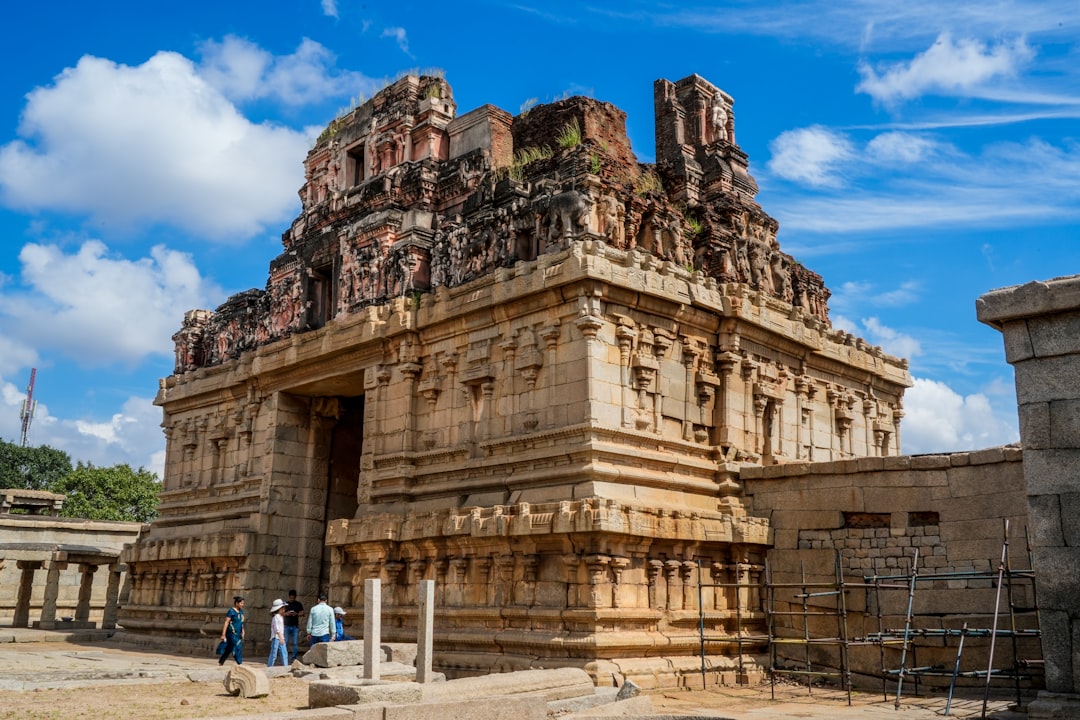
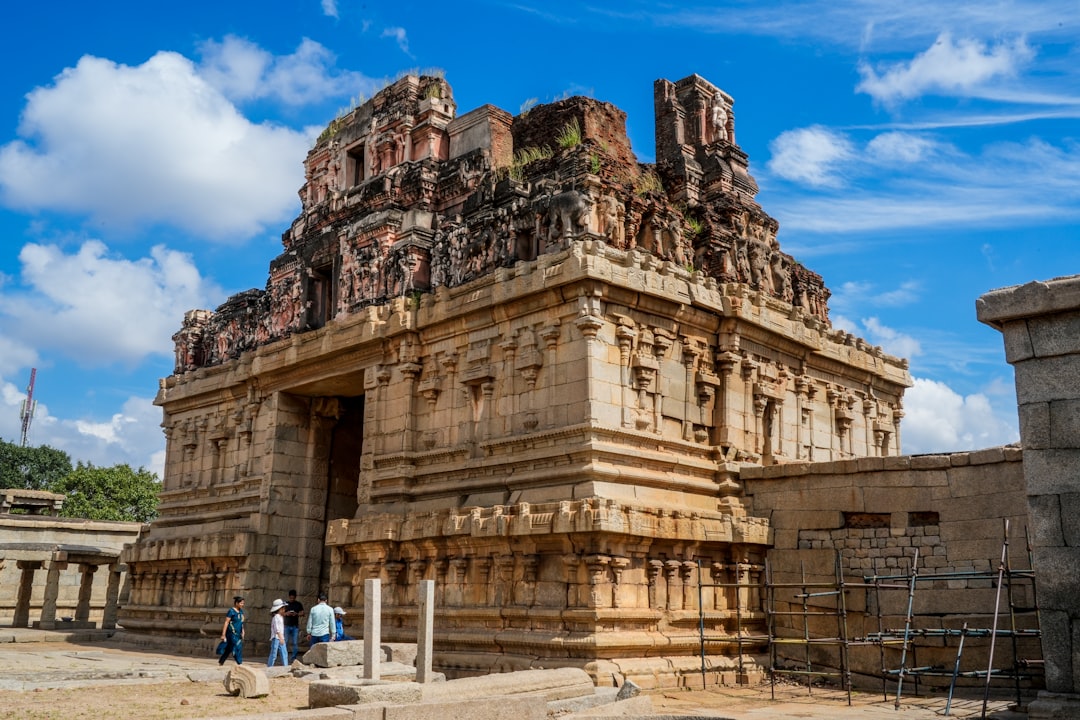
The architecture follows the same logic of the unity of form and meaning. In the Indian tradition, a temple is literally the body of a god, the Vastu Purusha, embodied in stone. Its proportions, its orientation to the cardinal directions, its decorative programs—all are subordinated to a cosmological order described in the texts of the Shilpashastra. The temple complexes of Khajuraho, Thanjavur, or the Meenakshi Temple in Madurai are not merely architectural masterpieces; they are encoded messages about the nature of the universe.
Bollywood and Beyond: Cinema as a People's Epic
If the classical arts are the backbone of Indian culture, then cinema became its heart in the 20th century. Bollywood — the very word has long since entered the global lexicon — produces about 1,800–2,000 films a year, second in quantity perhaps only to Nigeria's Nollywood. But it's not about the numbers.
Indian cinema found its formula from the very beginning—the masala film, where drama, comedy, melodrama, action, and musical numbers exist in a continuous, almost baroque abundance. Western critics long smiled condescendingly at this "naivety." Today, those same critics are reconsidering: could this totality of genres be the legacy of precisely that tradition where the Ramayana is simultaneously a love story, a war epic, and a philosophical treatise?
A new generation of directors — Mani Ratnam, Anu Menon, Payal Kapadia — is taking Indian cinema beyond the commercial formula. Kapadia's film "All We Imagine as Light," which won the Grand Prix at the 2024 Cannes Film Festival, was a genuine shock to international critics: a slow, almost somnambulant film about the women of Mumbai, where the city's noise becomes the backdrop for the quietest internal monologues.
"Indian cinema is finally ceasing to explain itself to the West and beginning to speak in its own voice," wrote film critic Peter Bradshaw in The Guardian.
Philosophy as a Way of Life
One of the most underappreciated aspects of Indian culture is its philosophical temperament. Since the Enlightenment, Western philosophy has consistently separated thought from practice. The Indian tradition has never permitted such a split.
Yoga — the most famous export product — was never a form of gymnastics in its homeland. It is an eight-limbed system by Patanjali, describing a path from ethical principles through physical discipline to meditation and, ultimately, to samadhi — a state of dissolving individual consciousness into the universal. What millions of people around the world practice in gyms as stretching is only the third of the eight limbs.
The Ayurveda system—traditional medicine—is undergoing academic rehabilitation today. Research shows that many of its principles on the connection between the microbiome, mental state, and physical health anticipated modern psychoneuroimmunology by two millennia.
Philosophical schools — Advaita Vedanta, Sankhya, Buddhism, Jainism — developed concepts that Western thought arrived at independently only in the 20th century. Ideas about the non-linearity of time, the illusory nature of a solid "self", and the interdependence of all phenomena today sound not like archaic notions, but like prophecy.
Modern India: Tradition in the Age of Algorithms
It would be a mistake to paint India exclusively in the pastel tones of antiquity. Modern Indian culture is a field of sharp contradictions, where the digital revolution has collided with millennia-old tradition, and it is not yet clear who will prevail.
A country with 800 million internet users has spawned an entire generation of artists, musicians, and writers who exist simultaneously across multiple cultural dimensions.
- Hindi rappers Divine and Naezy narrate the life of Mumbai's slums in a language that blends English slang with street Hindi.
- Artists of the "New Indian Wave" movement are reinterpreting Hindu iconography through contemporary visual art.
- Writers Arundhati Roy and Jhumpa Lahiri transformed the experience of the Indian diaspora into world literature.
- Fashion designers like Sabyasachi Mukherjee are building global brands on a proud rejection of Western aesthetics.
Meanwhile, Indian society is undergoing a painful polarization—between openness to the world and a nationalist demand for cultural purity, between urban cosmopolitanism and rural archaism, between the feminist movement and patriarchal structures that are in no hurry to surrender.
Why do we need to know this?
Indian culture is not an exotic backdrop for meditation retreats or a scenic prop for tourist photos in front of the Taj Mahal. It is one of the few living alternative models for how a human being’s relationship to time, the body, God, death, and beauty can be structured.
In a world weary of linear progress and exhausted by the search for meaning, the Indian tradition offers something radical: the idea that depth is more important than speed, that the cycle is more valuable than the straight line, that body and spirit are not adversaries, but partners in a single dance.
Perhaps that is precisely why the world is looking at India once again. Not because it provides answers—but because it poses questions we have not yet learned to phrase correctly.